

What Are Vocabulary Building Techniques?
Vocabulary building techniques refer to planning and strategies to help a student explore a new word, understand what it means, remember it, and use it in different situations. To improve your active vocabulary (the words you use) and passive vocabulary (the words you understand and recognise), you need to use the techniques to realise the full potential of your word bank.
Struggling to Remember New Words and Use Them Confidently?
Create a structured plan with daily reading, flashcards, and journal tracking to expand your vocabulary efficiently.
Why Strong Vocabulary Matters?
These are the positive aspects of growing your strong vocabulary skills:
- Strengthens your ability to communicate and articulate your thoughts better
- Increases your confidence in using English vocabulary building examples
- Enhances your ability to understand what you are reading and think about it critically
- Encourages you to grow academically and professionally
Being able to build your vocabulary is a skill that you can use in any aspect of your learning or your work.
Essential English Vocabulary Building Techniques
Below are the essential English vocabulary building techniques that students must know before appearing in the exams.
Read Widely and Regularly
One of the most effective ways to improve your vocabulary is to read. Books, magazines, articles, blog posts, and news stories allow language learners to see how words can be used in different ways. When you read, your brain absorbs the different ways in which words can be used, their different meanings and their subtleties.
Practical Tip: When you read, keep track of the words you don’t recognise. Stop and think about the meaning of the word based on the context of the sentence in which it is used.
Use Flashcards and Spaced Review
Use flashcards to help memorise new words. Spaced repetition, or reviewing the words at longer intervals, is a method that will help you improve your vocabulary and transfer words from your short-term memory to your long-term memory.
Practical Tip: Use a card for each word and write the word on one side. Then, on the other side, write its definition, a sentence that uses the word, and a couple of synonyms. After that, review the cards daily, or at least once a week.
Maintain a Vocabulary Journal
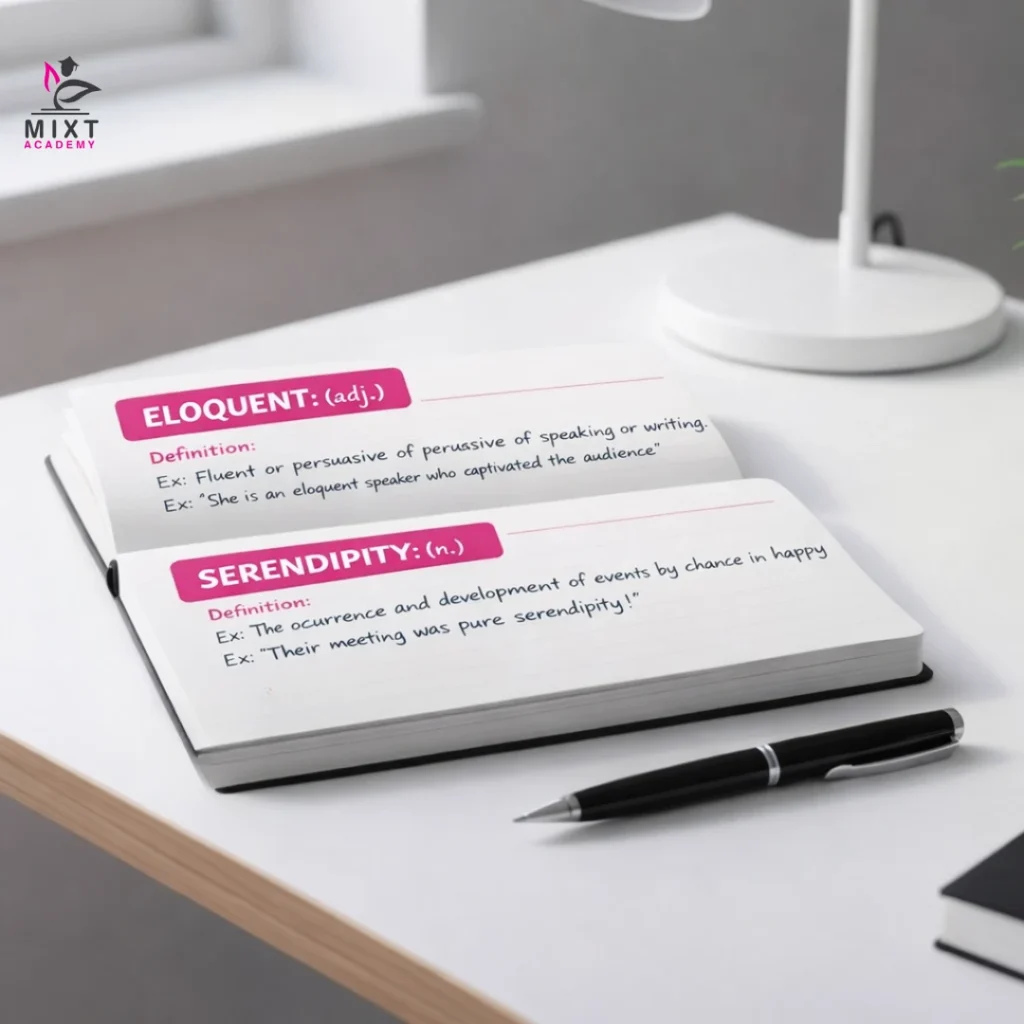
Keeping a vocabulary journal is a simple and effective way to build memory. Each time you learn a new word and its definition, write it in your journal. Along with the definition, write a sentence that uses the word, some synonyms, and the different forms of that word (if it has any). Review your journal regularly to make sure that you don’t forget the words you have been learning.
Learn Word Roots, Prefixes, and Suffixes
When you understand the root of a word and its affixes, you can also understand the meaning of a new word. This technique will help you expand your vocabulary and improve your understanding of the related words.
Practice Using Words in Context
Memorising words is just the beginning; you need to use them in sentences, conversations, or any type of writing to memorise them. Students must learn vocabulary-building examples and be able to use words in context to incorporate them into their active vocabulary fully.
Engage in Word Games and Activities
Crosswords, word searches, and vocabulary quizzes help learn new words interactively and enjoyably. They also help build grammar and vocabulary through repetition and encourage creativity.
Participate in Conversations
This approach makes students use the vocabulary in real situations and helps them practice. It helps them with their pronunciation and fluency, as well as their confidence.
Listen to Audio and Visual Content
Hearing words in the context of a sentence helps with understanding and pronunciation. This also helps with overall language learning.
Want Expert Guidance to Grow Your Vocabulary Faster and More Effectively?
Join Mixt Academy’s online program with interactive lessons, personalised exercises, and expert mentorship.
Vocabulary Building Techniques in Teaching
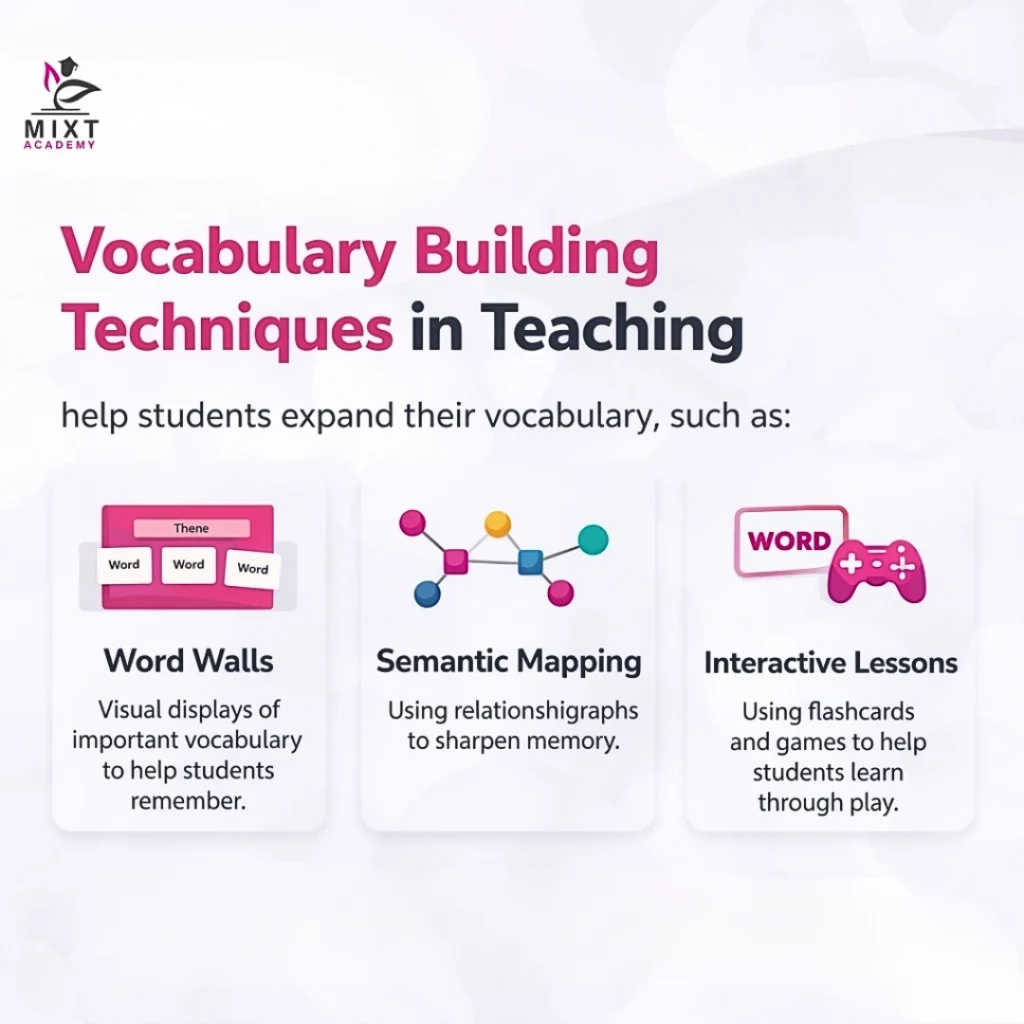
Class teachers can rely on different techniques to help students expand their vocabulary, such as:
- Word Walls: Visual displays of important vocabulary to help students remember.
- Semantic Mapping: Using relationship graphs to sharpen memory.
- Interactive Lessons: Using flashcards and games to help students learn through play.
All of these techniques promote active learning, help with retention, and decrease vocabulary gaps.
Vocabulary Building Techniques for Adults
Vocabulary building techniques that adults can realistically use in their daily life are:
- Focusing on real-world usage in work or social situations.
- Use new vocabulary in emails, reports, or any writing that you do.
- Setting small targets, e.g., learning 20 words to improve your vocabulary every week.
More than learning vocabulary, these strategies make the process purposeful, engaging, and easier to do on a regular basis.
Vocabulary Building Notes PDF
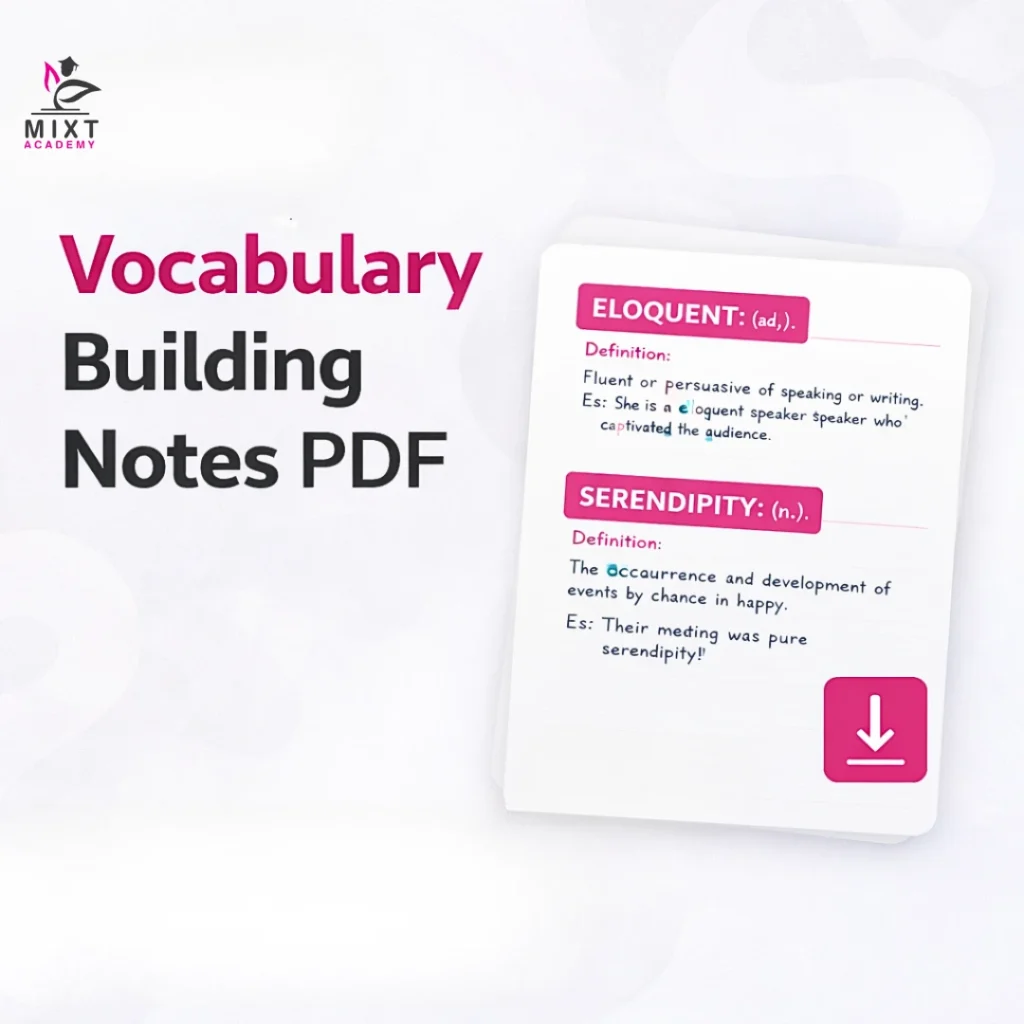
One of the most effective ways of learning vocabulary is creating a personalised vocabulary-building notes PDF. Journals and flashcards can be exported into a printable document so that you can study, review, and reference your notes offline.
Recommended Actions to Strengthen Vocabulary
Below are the recommended actions to strengthen your vocabulary.
- Start Your Personalised Vocabulary Plan Today: Use your journal and flashcards to create a plan that allows you to organise and track the growth of your vocabulary.
- Download Your Vocabulary Notes PDF: Organise the new words you have collected in a vocabulary notes PDF to review them anytime.
- Join a Vocabulary Mastery Program: Join any of these vocabulary mastery programs to access sessions that have vocabulary games, interactive exercises, and other learning activities.
Take Your Vocabulary to the Next Level!

To improve your vocabulary means more than customising your word bank; it means learning how to use words with confidence and using them with precision. Applying the various English vocabulary building techniques, like reading, journaling, talking, etc., can help you increase your vocabulary for the better. Mixt Academy online English tutoring is designed for those who need help structuring their thoughts. We offer personalised sessions and activities to improve students’ vocabulary and communication. The tutoring approach is perfect for students or adults in the professional world as it combines the best strategies with expert mentorship. Our English tutors guide you towards fluency and boost your grades in English.