
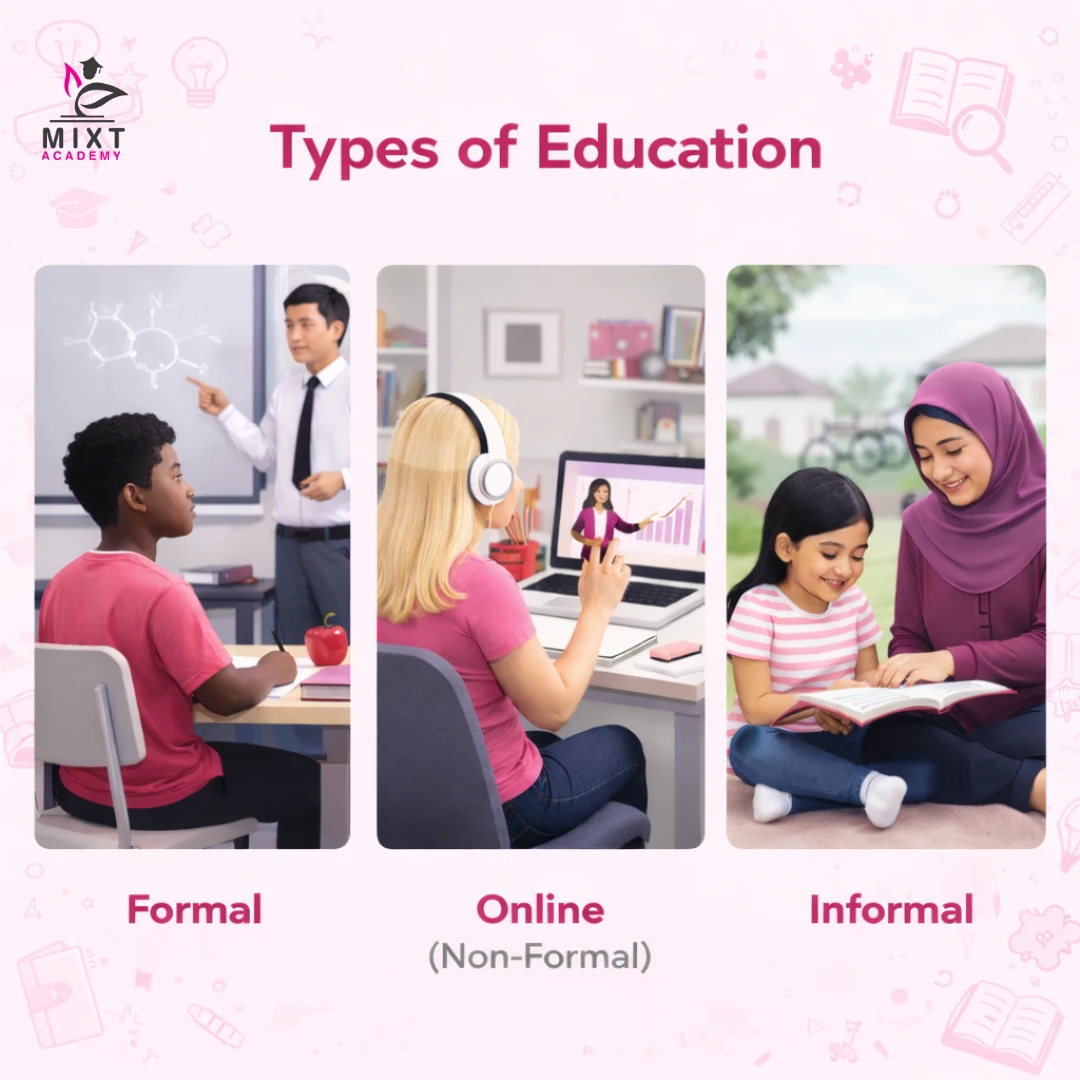
Education is the primary driver of both personal development and societal advancement, yet its implementation varies across cultures. Educational systems across the globe develop through the interaction of cultural elements and economic factors, social values and resource distribution, which determine different learning approaches for students and different patterns of social development.
Educational institutions provide structured classroom instruction and skill development through academic programs that extend throughout an individual’s lifetime. Educational programs provide learning opportunities that help students, their families, teachers, and education decision-makers select appropriate learning options for different situations.
The blog, published by Mixt Academy, presents a comprehensive guide to international education systems, explaining different educational pathways and their potential benefits and actual effects on society.
Understanding Education in Simple Words
The educational process enables people to acquire knowledge and skills. Moreover, it develops their values and habits, which enable them to grow and participate in society. The education system begins in early childhood and continues until death. At the same time, it develops individuals’ learning, communicative, and problem-solving abilities.
Education exists beyond the boundaries of schools and classrooms. People acquire knowledge through everyday activities, training programs, and self-study outside the formal education system provided by schools and universities. Learning occurs in all environments, including home spaces for private 1-on-1 tutoring, both in-person and online sessions, work locations, and community areas.
In simple terms, education helps people understand the world around them, make better decisions, and improve their quality of life. It plays a vital role in personal development, career opportunities, and building strong, informed societies.
Education System as a Lifelong Journey of Growth
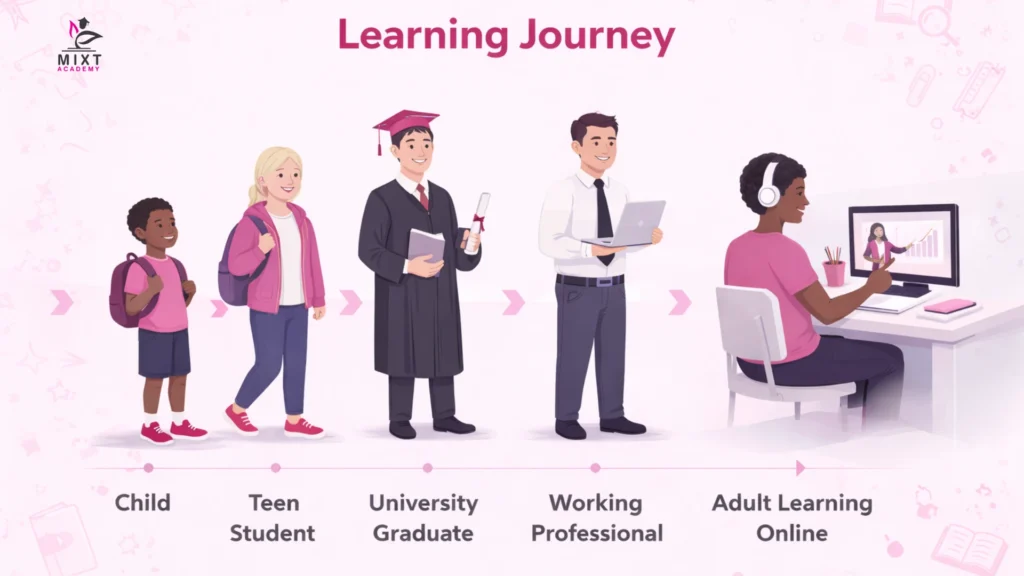
The education system is a lifelong journey through which individuals gain knowledge, develop skills, and build values that help them understand the world and participate meaningfully in society. It is not limited to classrooms or degrees; learning takes place through everyday experiences, reading, observation, and interaction. Education encourages positive behaviour, strengthens critical thinking, and prepares individuals to face real-life challenges with confidence.
Major Key Aspects of Education
Beyond Formal Schooling
Although schools and universities play a central role, education also occurs outside formal institutions. People learn continuously through family, community, work environments, and self-directed study.
Purpose of Education
The primary goal of education is to nurture an individual’s overall potential. It promotes creativity, ethical values, problem-solving abilities, and informed decision-making, enabling people to adapt to a changing world.
Continuous Growth
Education is an ongoing process rather than a one-time achievement. It goes beyond examinations and certificates, encouraging awareness, curiosity, and personal development throughout life.
Types of Education
- Formal Education: Structured learning provided by schools, colleges, and universities.
- Non-Formal Education: Organised learning outside traditional classrooms, such as training programs and workshops.
- Informal Education: Learning gained through daily activities and life experiences.
Value to Society
Education is recognised globally as a basic human right and a foundation for social progress. It supports economic development, promotes equality, and helps create informed, responsible citizens.
What are the Main Types of Education?
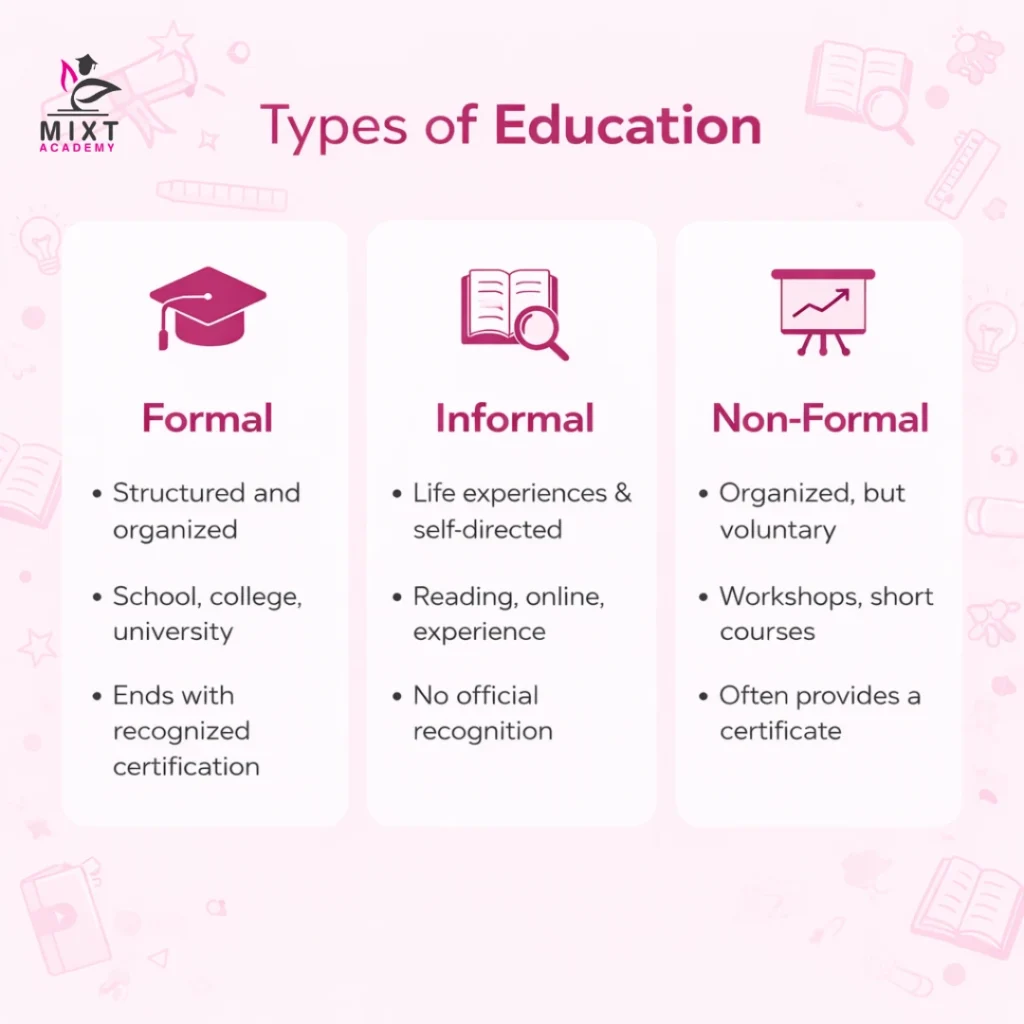
What are the 3 types of education? The three primary types of education are Formal, Informal, and Non-Formal, each playing a unique role in personal and societal development.
Key Types of Education
Together, these three types of education work in harmony to support the comprehensive development of individuals by combining structured learning, skill acquisition, and experiential growth.
Formal Education & Its Features
Formal education occurs in schools, colleges, and universities. It follows a set curriculum, is delivered by trained online tutors, and leads to official qualifications. Learning is chronological, organised in grades or levels, and follows a defined timeframe.
Features of Formal Education
- Organised Structure: Formal education is highly systematic, following a clear, chronological framework that guides learning step by step.
- Institutional Learning: It takes place in accredited schools, colleges, or online institutions that provide a recognised learning environment.
- Curriculum-Driven: Learning follows a structured curriculum approved by educational authorities that covers specific subjects and skills.
- Time-Bound Programs: Education is delivered within set timeframes, such as academic years, semesters, or terms.
- Qualified Instructors: Lessons are taught by professionally trained teachers and subject matter experts.
- Assessment and Certification: Learners are evaluated through exams, assignments, and other assessments, culminating in formal certifications such as diplomas or degrees.
- Mandatory Rules: Attendance, discipline, and fee requirements are often enforced to ensure regular participation and accountability.
- Progressive Learning: Students advance through grades or levels based on their demonstrated understanding and performance.
Informal Education & Its Features
Informal education is unplanned and unstructured. It occurs throughout life, often through daily interactions, self-directed learning, family guidance, and practical experiences. It focuses on learning by doing and personal growth rather than formal assessment.
Features of Informal Education
- Spontaneous and Unstructured: Learning happens naturally, without being pre-planned or rigid. It often arises from daily experiences and interactions with family, friends, or the community.
- Lifelong Learning: Informal education continues throughout life, from early childhood to adulthood, with no specific age limits.
- No Fixed Curriculum or Certification: There is no formal syllabus, examinations, or official diplomas; learning is flexible and self-directed.
- Natural and Flexible Settings: Knowledge is acquired in real-world environments, such as the home, workplace, or community, rather than in a traditional classroom.
- Self-Motivated and Voluntary: Learners guide their own education, pursuing topics that interest them or meet their personal needs.
- Practical and Experiential: Skills and understanding are developed through real-life practice, problem-solving, and hands-on experience.
- Guided by Anyone: Teachers are not required to be formally trained; parents, peers, or mentors can all serve as educators.
- Cost-Free Learning: Informal education typically involves no fees, making it accessible to everyone.
Non-Formal Education & Its Features
Non-formal education is structured and intentional but takes place outside traditional classrooms. Examples include workshops, vocational training, adult education, and skill-development programs. It is often designed to meet specific learning needs and practical goals.
Features of Non-Formal Education
- Flexible and Accessible: Non-formal education is adaptable to the learner’s schedule, needs, and goals. It is often designed for specific groups, such as working adults or professionals seeking new skills.
- Organised Outside Traditional Schools: While structured and planned, it occurs outside the formal school system and does not follow a strict hierarchy.
- Practical and Goal-Oriented: The focus is on acquiring functional, vocational, or technical skills that can be applied immediately, rather than on theoretical knowledge.
- Voluntary Participation: Learners engage willingly, motivated by personal interest, career goals, or specific learning needs.
- Lifelong Learning Opportunities: Non-formal education is available to individuals of all ages, with no strict age or time limits.
- Assessment and Recognition: While formal exams are not usually required, some programs may provide completion certificates or skill-based credentials.
- Varied Teaching Methods: Learning occurs through interactive approaches, including workshops, seminars, community programs, and on-the-job training.Types of Education Examples: Formal, Informal & Non-formal
Study Online From Home on Your Own Schedule.
Join Mixt Academy Online, a trusted global platform connecting students with qualified tutors for personalised learning.
Quick Comparison of Education Types
| Particulars | Formal Education | Informal Education | Non-Formal Education |
|---|---|---|---|
| Category | Structured, institutionalised learning with curriculum and certification | Unstructured, spontaneous learning from daily experiences | Organised learning outside formal schools, skill-based and flexible |
| Aspect | Schools, colleges, universities, and professional degrees | Learning from family, peers, media, and life experiences | Adult literacy programs, vocational courses, community workshops |
| Activities | Classroom teaching, exams, assignments, projects | Conversations, hobbies, observations, self-study | Workshops, practical demonstrations, interactive sessions |
| Feature | Predefined syllabus approved by authorities | No fixed syllabus, learner-driven | Designed for specific skills or knowledge areas |
| Criteria | Degrees, diplomas, academic qualifications | Personal development, life skills, social abilities | Skill acquisition, participation certificates, and practical competencies |
| Sources | Educational institutions, certified teachers | Family, society, environment, media | NGOs, training centres, online platforms, community organisations |
| Methods | Structured instruction, formal assessments | Observation, imitation, trial and error, and discussion | Hands-on practice, interactive learning, flexible assessment |
Types of Education Examples: Formal, Informal & Non-formal
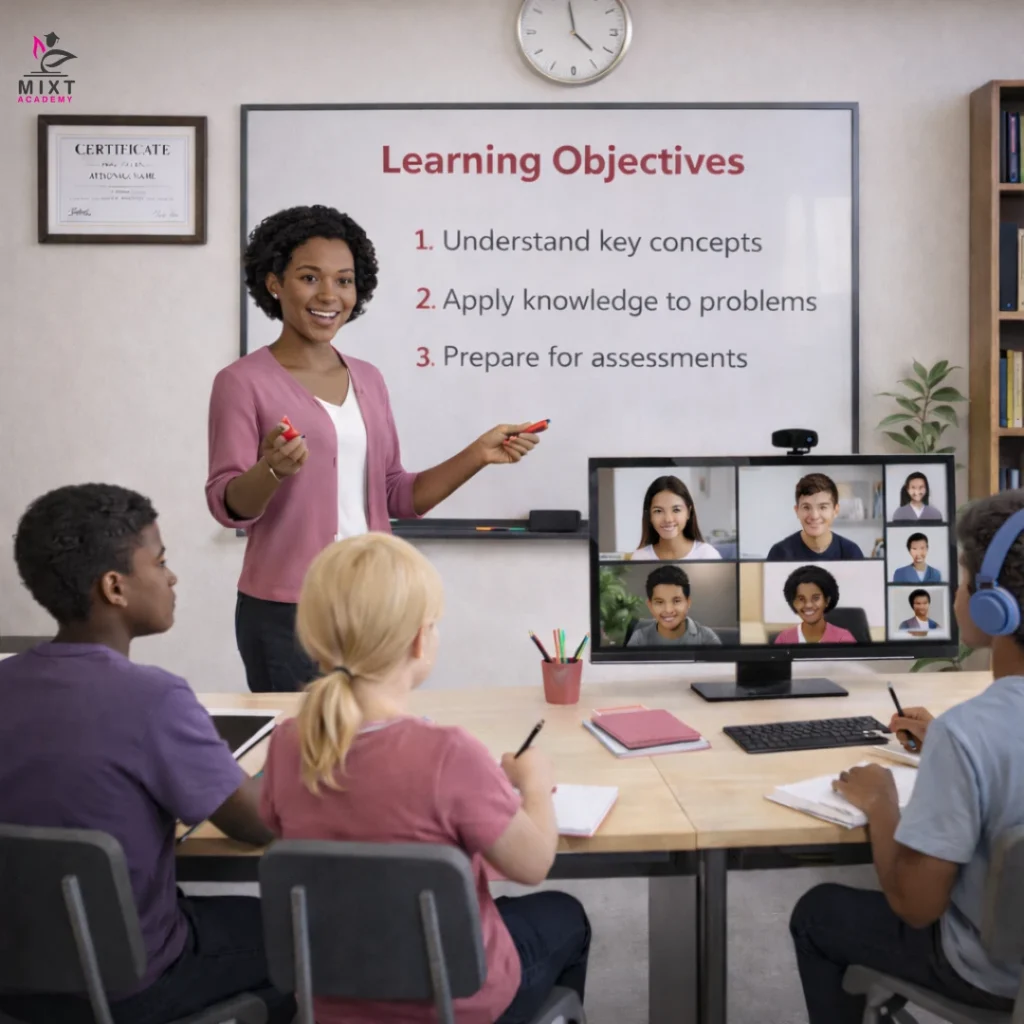
Formal Education Examples
- Primary and Secondary Schools: These include elementary, middle, and high schools that follow a structured curriculum, helping students systematically build foundational knowledge, skills, and academic habits.
- Colleges and Universities: Undergraduate and postgraduate programs provide advanced learning across various fields, offering degrees that prepare students for professional careers and specialised knowledge.
- Vocational and Technical Institutes: These institutions offer organised, skill-focused programs in trades or technical fields, such as engineering, IT, carpentry, or healthcare, emphasising practical, hands-on training.
- Professional Certification Programs: Accredited courses such as CPA, medical, and legal qualifications provide specialised credentials, preparing students with professional skills recognised by industry and regulatory bodies.
- Online Accredited Courses: Structured programs offered by recognised universities or institutions, such as Mixt Academy Online, award certificates or degrees, enabling flexible learning and access to quality education remotely.
- Military and Police Academies: Formal academies provide structured, disciplined training programs that prepare individuals for careers in defence, law enforcement, and public safety, with official certification.
Informal Education Examples
- Learning from Family and Friends: Gaining knowledge, values, and life skills through interactions, guidance, and observations from parents, siblings, relatives, or peers in everyday life.
- Self-Directed Learning: Exploring topics independently through books, online resources, videos, or personal projects, allowing learners to pursue their interests at their own pace.
- Community and Cultural Experiences: Learning about traditions, social norms, and practical skills by participating in community events, local activities, or cultural programs.
- Workplace Learning: Acquiring skills, knowledge, and professional habits informally through daily work experiences, mentorship, observation, and problem-solving without structured training programs.
- Hobbies and Personal Interests: Developing creative, analytical, or practical abilities through activities like music, art, gardening, sports, or coding outside formal education settings.
- Media and Technology: Learning from documentaries, podcasts, social media, online forums, or educational videos, which provide informal knowledge across a wide variety of topics.
Non-formal Education Examples
- Adult Literacy Programs: Organised classes for adults to improve reading, writing, and basic numeracy skills, helping participants gain confidence and practical abilities for daily life.
- Vocational and Skill-Building Courses: Structured programs designed to teach practical skills like carpentry, coding, digital marketing, or tailoring, aimed at enhancing career opportunities.
- Community Workshops and Seminars: Local workshops or interactive seminars that provide focused learning on topics such as health, entrepreneurship, environmental awareness, or civic responsibilities.
- Online Short Courses: Structured, skill-focused programs offered by trusted platforms like Mixt Academy, providing flexible online learning and completion certificates without traditional school enrollment.
- Extracurricular Programs for Youth: Clubs, camps, or after-school programs teaching teamwork, leadership, problem-solving, and creative skills outside the formal school curriculum.
- Professional Development Programs: Targeted training for employees or professionals to upgrade skills, improve workplace performance, and stay current with industry trends and standards.
Pros & Cons of Types of Education
| Type of Education | Advantages | Dis-advantages |
|---|---|---|
| Formal Education |
|
|
| Informal Education |
|
|
| Non-Formal Education |
|
|
How Education Systems Are Transforming?
The education system worldwide is continually evolving to meet the needs of modern society. Rapid technological advancements, changing workforce demands, and diverse learning styles are reshaping how education is delivered, making it more flexible, inclusive, and skill-oriented than ever before.
- Integration of Technology: Digital tools, online platforms, and AI are enhancing access, personalisation, and engagement in learning.
- Focus on Lifelong Learning: Education is no longer limited to childhood; adults are increasingly participating in upskilling and reskilling programs.
- Student-Centred Approaches: Focus is shifting from rote memorisation to active, experiential, and project-based learning.
- Skill-Based Curricula: Schools and universities include vocational, technical, and soft skills to prepare students for real-world challenges.
- Global Collaboration: Cross-cultural programs, international exchanges, and online collaborations expose students to diverse perspectives.
- Flexible Learning Formats: Blended learning, hybrid classrooms, and modular courses offer personalised, adaptable learning paths.
- Inclusivity and Accessibility: Systems are evolving to accommodate students with disabilities, underrepresented groups, and remote learners.
- Data-Driven Decision Making: Learning analytics help track progress, identify gaps, and enhance teaching effectiveness.
Explore the Different Types of Education with Mixt Academy!
Understanding the types of education, formal, informal, and non-formal, helps students of all ages choose the right path. From structured classroom programs to skill-based, self-directed learning, our trusted online tutoring platform offers flexible, certified online courses and workshops designed to meet diverse educational needs.
Discover 4 types of education, gain practical skills, and achieve personal and professional growth from anywhere in the world. Join Mixt Academy Online Today for Personalised Learning!
Understanding Your Education Options
Understanding the types of education is essential for making informed decisions about learning and careers, from formal education in schools and universities to non-formal education such as workshops. In addition, informal learning through daily experiences uniquely contributes to personal and professional growth.
Exploring the types of education and examples helps students, parents, and online tutors adapt to diverse learning needs. By understanding the 3 types of education and the evolving types of education systems, individuals can choose flexible, skills-oriented learning opportunities.
Platforms like Mixt Academy provide online programs that make quality education accessible worldwide.